Deutsche Bank fraud
Deutsche Bank, Commerzbank and the savings banks set up a joint company to flag accounts used for fraud, after 1.8 million fraudulent payments cost Germany more than EUR 580 million in 2025
In this article
Deutsche Bank, Commerzbank and the German Savings Banks Association (DSGV) are setting up a joint company that lets banks warn each other about accounts used for fraud, the three said on 11 November 2026. Fraudulent payments cost people and businesses in Germany more than EUR 580 million in 2025, the Bundesbank says.
The first product targets phishing, investment fraud, fraud in the sale of goods and romance scams. It is already at an advanced stage of development, according to the founders.
“Fraud can be contained more effectively when banks can securely share relevant findings with one another in a legally compliant manner,” said Dominik Hennen, head of personal banking at Deutsche Bank.
Why German banks are pooling fraud data
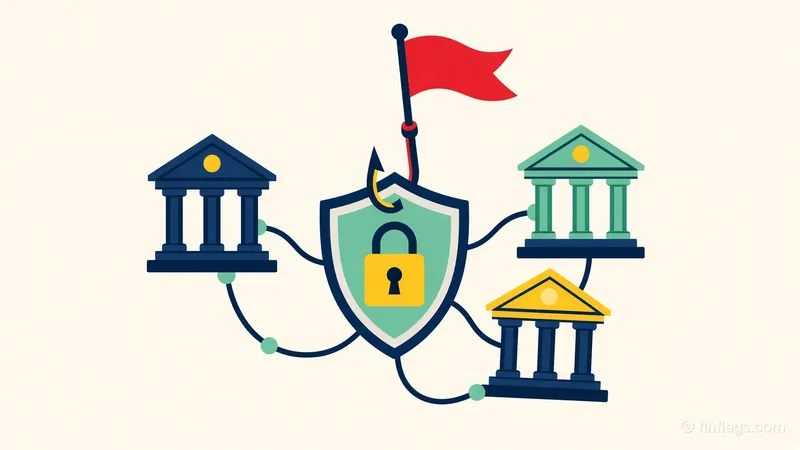
Fraudsters often open accounts at several banks and move stolen money between them within a short time, so a single bank sees only part of the chain. Under the new system, a bank that identifies an account used for fraud makes that information available to the other members, which can then block or check payments to it earlier.
Each bank decides for itself what to do with the warning. The data is matched with multi-party computation, a cryptographic method that lets banks compare specific details without handing over all the underlying customer data.
“Security in payments is not a matter of competition but a shared responsibility of the banking industry,” said Joachim Schmalzl, executive board member of the DSGV, the umbrella body of the Sparkassen savings banks.
We also covered Deutsche Bank in our guide of November 16, 2026.
How big payment fraud is in Germany and Europe
| Market | Year | Measure | Value | Data from |
|---|---|---|---|---|
| Germany | 2025 | fraudulent payment transactions | 1.8 million | Bundesbank |
| European Economic Area | 2024 | value of payment fraud | EUR 4.2 billion | EBA and ECB |
| European Economic Area | 2024 | fraud on credit transfers | EUR 2.2 billion | EBA and ECB |
| European Economic Area | 2024 | share of credit transfer fraud losses borne by customers | 85% | EBA and ECB |
Figures as published by the Bundesbank, the European Banking Authority (EBA) and the European Central Bank (ECB), checked on 16 November 2026.
On the Bundesbank figures, each fraudulent payment in Germany in 2025 cost more than EUR 320 on average, Finflags calculates. Across the European Economic Area, customers rather than banks carry most of the loss when they are tricked into sending a transfer themselves, which is why an early warning on the receiving account matters to them.
Who can join
The founders plan to offer the service to other banks and to other firms that have anti-money-laundering duties, known in anti-money-laundering law as obliged entities. Each new member adds to the pool of flagged accounts.
The service is meant to complement government and supervisory measures against financial crime, not to replace them. Later products will cover more fraud checks and compliance tasks, as new European payment rules require banks to exchange information on fraud and money laundering.
What it means for bank customers
The system runs between banks, and customers do not sign up for it. What changes for them is the chance that a payment to an account another bank has already flagged gets caught before the money leaves.
The founders gave no name for the company, no ownership split and no launch date. When a bank must return money lost to fraud in Europe is set out in bank fraud.
Which banks and fintechs open an account on your passport is in our account filter, which covers 124 providers in five countries.
You may use the information in this article provided you include a link to Finflags and to this article.
This article covers Deutsche Bank, Commerzbank and DSGV. Written by Mary Jane, our lead journalist, and checked by the Finflags editors. The date above is the date of the event. Fees, limits and terms change: tell us if something here is out of date.