Payy wallet exploit drains USD 1.92 million in USDC
An attacker emptied the bridge contract that held card balances, and the company froze deposits, withdrawals and every card payment

In this article
An attacker drained about USD 1.92 million in USDC from Payy Network on September 24, 2026. The funds were taken from the Ethereum contract that connects Payy’s privacy rollup to the main network.
Payy halted deposits, withdrawals and card payments the same day. The company said the stolen funds were “users’ non-custodial deposits to Payy Network / Payy Wallet.”
A card that held money on a contract
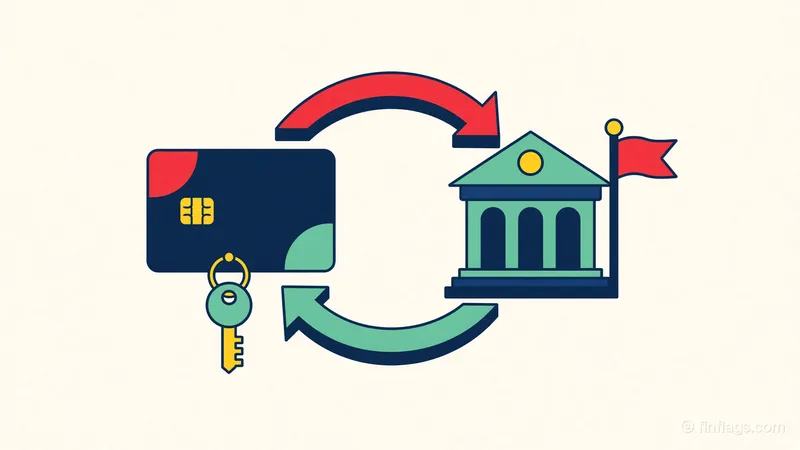
Payy sold itself as a private crypto card. Most crypto cards are a front end on top of an issuer’s account. Payy worked differently. Users topped up a separate wallet balance, and the funds were locked in smart contracts on Payy’s own network.
That design hid the link between a user’s on-chain address and their card spending. It also put every user’s balance in one contract. The contract became the single point the attacker needed to break.
How the drain happened
Reports on the attack describe one malicious transaction that passed through the contract’s verifyRollup function. The first on-chain transfer showed about USD 1.83 million leaving the contract. The total later rose to USD 1.92 million.
Payy ruled out a stolen private key in its first statement. A later post-mortem, cited in industry coverage, put the cause on a flaw in the proof verifier, which accepted an invalid proof that tokens had been burned. According to the same reports, the attacker used the privacy protocol Railgun and swapped the stolen USDC into ETH.
Who lost what
| Item | Status after the exploit |
|---|---|
| Amount drained | About USD 1.92 million in USDC |
| Deposits and withdrawals | Halted |
| Card payments | Halted |
| Payy Wallet | Suspended |
| First figure reported | About USD 1.83 million |
Payy’s statement on September 24 gave no breakdown of customer balances. Because all deposits sat in the same contract, the freeze hit every user, not only those whose funds the attacker took first.
A second blow in one month
The exploit came three weeks after a separate shock for part of Payy’s customer base. On September 3, 2026, Payy ended its card program for customers who had opened accounts with Russian or Ukrainian passports, as set out in Payy discontinues its Visa card in several regions. Those customers kept access to their wallet balances after the card stopped. The September 24 freeze then locked those balances too.
Payy’s product had been built around privacy from the start. Payments ran through a zero-knowledge network, a system that proves a transaction is valid without showing its details, and the card was a US-issued Visa funded in USDC. The design is described in PAYY review: a zero-knowledge wallet with a Visa card.
On a related subject, read “NEAR Intents recovers USD 3.8 million after exploit”, from October 2, 2026.
How the root cause was reported
Payy’s first statement narrowed the cause. The company said the drain “was NOT a compromised key, social engineering or exploit of our off-chain infrastructure.”
Both outgoing payments passed through verifyRollup, the function Payy uses to post batches of network activity to its Ethereum bridge. Industry coverage of the later post-mortem linked the flaw to the Noir and Barretenberg proof system from Aztec, which accepted an invalid proof. Payy gave no official loss figure in its first statements, and published estimates ranged from USD 1.83 million to USD 1.92 million.
Card-linked contract failures in 2026
Payy was not the only crypto card provider hit by a contract failure in 2026.
| Date | Provider | What failed |
|---|---|---|
| February 2026 | Blend, a lending protocol on Stellar | A community pool, YieldBlox, was drained |
| June 2026 | Gnosis Pay | The Delay Module on card accounts |
| September 2026 | Payy | The proof verifier on the Ethereum bridge |
In the Blend case, Script3, the developer, promised that depositors would be repaid in full, as reported in Blend promises full compensation after YieldBlox pool drain.
What happened next
Payy later opened a claims process with a 30-day window. The company said valid claims would be paid in USDC on Ethereum. It also said Payy Wallet would be shut down for good once the claims window closed.
The lesson for card users
Most crypto cards keep user funds with a regulated issuer or a custodian. Payy kept them in code that it wrote and operated. A bug in that code put the whole balance at risk at once.
Privacy was the product’s selling point, and the same contract design produced the loss. A card balance on any platform of this type is exposed to contract risk as well as company risk. Keeping only a few weeks of spending on such a card limits the damage when a contract fails.
How many euros the same dollar amount brings in fiat and stablecoin apps is in our USD and USDC to EUR rate comparison.
This article covers Payy. Written by Mary Jane, our lead journalist, and checked by the Finflags editors. The date above is the date of the event. Fees, limits and terms change: tell us if something here is out of date.